Lost in Muharraq’s Lanes: Where Every Wall Tells a Story
Walking through Muharraq, Bahrain, I didn’t expect to find myself hiking—not on rocky trails, but through alleyways alive with history. The island’s old neighborhoods unfold like open-air museums, where coral stone houses and wind towers rise from narrow passageways. This isn’t just sightseeing; it’s stepping into centuries of craftsmanship. If you’re craving authenticity, Muharraq’s architectural soul will pull you in. Each turn reveals a new layer—of time, of tradition, of quiet resilience etched into walls that have stood through generations. In a world of fleeting trends, this place offers something rare: continuity.
The Unexpected Hike: Discovering Muharraq on Foot
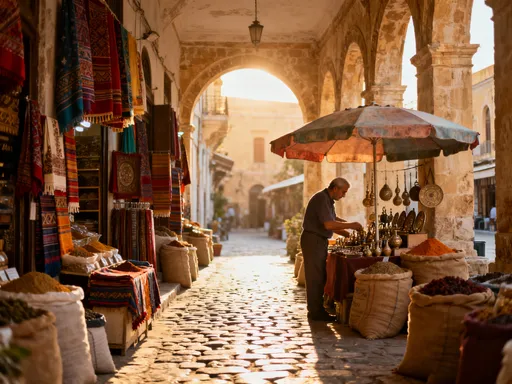
Muharraq invites a different kind of adventure—one measured not in elevation gain but in moments of quiet revelation. What begins as a simple walk soon becomes a rhythmic journey through time, where the act of walking itself transforms observation into understanding. Unlike conventional hikes that lead to panoramic views at mountain summits, this urban trek unfolds at ground level, where every step brings you closer to the texture of everyday life from centuries past. The city’s historic core is laid out in a web of narrow lanes, some wide enough for a single person, others opening unexpectedly into small courtyards or shaded plazas. These pathways were not designed for speed but for connection—for neighbors to greet one another, for breezes to flow freely, and for life to unfold in measured, communal rhythms.
Walking through these lanes, one quickly notices how the urban fabric guides movement. The alleys twist and turn, shielding residents from the harsh sun and strong coastal winds, while encouraging natural ventilation. There are no straight lines stretching endlessly; instead, the layout follows organic patterns shaped by generations of lived experience. As visitors follow these paths, they begin to sense the intelligence embedded in the design—not imposed from above, but grown gradually from necessity and wisdom. The ground beneath your feet may be paved with modern concrete in places, but the surrounding walls—built from coral stone harvested from the sea—speak of a different era, one where materials were gathered locally and homes were shaped by climate, culture, and community.
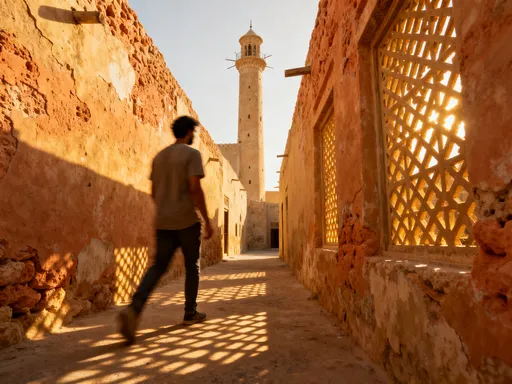
This form of exploration rewards slowness. Rushing through would mean missing the subtle details: the way light filters through a latticed window, casting intricate shadows on the wall; the faint scent of jasmine drifting from a hidden garden; the soft echo of footsteps bouncing off centuries-old masonry. These sensory impressions accumulate, creating a deeper awareness of place. Walking becomes a meditative act, allowing space for reflection and emotional resonance. It’s not merely about seeing historic buildings—it’s about feeling their presence, understanding how they once supported daily life, and recognizing the enduring values they represent: modesty, sustainability, and human-scale living.
For travelers accustomed to ticking off landmarks from a list, Muharraq offers a different kind of fulfillment. There are no grand monuments demanding attention at every turn. Instead, significance emerges gradually, revealed through patience and presence. This kind of journey doesn’t require physical endurance, but rather an openness to discovery. And in that openness lies its power—to shift perspective, to slow time, and to reconnect with the quiet dignity of places shaped by generations before us.
A Living Museum: Muharraq’s Architectural Identity
Muharraq is not a reconstructed heritage site frozen in time; it is a living neighborhood where history continues to breathe within active homes and evolving streets. Its architecture tells the story of a society deeply attuned to its environment, built during the height of Bahrain’s pearling economy in the 18th and 19th centuries. At that time, Muharraq was the heart of a maritime trade network that stretched across the Gulf, and the wealth generated from pearl diving funded the construction of elegant yet practical homes. These buildings were not designed for show, but for comfort, resilience, and social harmony—qualities that remain evident today.
One of the most defining features of Muharraq’s architecture is the use of coral stone, harvested from the shallow waters surrounding the island. This porous material, cut into blocks and laid in thick walls, provides excellent thermal insulation. During the day, it absorbs heat slowly, preventing interiors from overheating, and releases it gradually at night, maintaining a more stable indoor temperature. These walls, often left unpainted, display a warm, honeyed tone that deepens with age. Over time, exposure to wind and salt air gives them a weathered texture, each mark a record of decades—or even centuries—of endurance against the elements.
Complementing the coral stone construction are wooden beams made from mangrove timber, imported from East Africa via ancient trade routes. These durable beams support ceilings and upper floors, resisting both decay and insect damage in the humid coastal climate. Their presence is a testament to the global connections that shaped local life long before modern globalization. Above them, intricate latticework known as mashrabiya adorns windows and balconies, allowing residents to observe the street while maintaining privacy—a cultural value reflected in architectural form. These lattices also serve a functional purpose, diffusing sunlight and encouraging airflow, contributing to natural cooling.
Perhaps the most iconic feature of Muharraq’s homes is the barjeel, or wind tower—a traditional air-conditioning system developed centuries before electricity. Rising above the roofline, these towers capture prevailing sea breezes and funnel them down into the interior spaces, creating a continuous flow of fresh, cooled air. Their design varies by household, with some featuring multiple openings oriented to catch winds from different directions. Even today, in homes that have been restored with modern amenities, many families choose to preserve and use their barjeels, not only for their effectiveness but as a symbol of cultural identity.
Equally important are the rawdha courtyards—central open spaces around which rooms are arranged. These private oases provide light, ventilation, and a place for family gatherings. Often planted with date palms or flowering shrubs, they create microclimates that further moderate indoor temperatures. In a region known for intense heat, such design solutions demonstrate a profound understanding of environmental adaptation. Together, these architectural elements reveal a way of building that is both sustainable and deeply human-centered—a legacy that modern urban planners continue to study and admire.
Al-Khamis District: Where History Stands Tall
Among Muharraq’s many historic quarters, Al-Khamis stands out for its remarkable preservation and atmospheric depth. This neighborhood, centered around the Al-Khamis Mosque—one of the oldest in Bahrain—has retained much of its original urban fabric, offering visitors a rare glimpse into domestic life from two centuries ago. Unlike museum exhibits behind glass, the homes here are not staged reconstructions; many are still occupied, their courtyards swept each morning, their doors opened and closed with daily routine. This continuity gives Al-Khamis a quiet authenticity that cannot be replicated.
As you enter the district, the pace of life seems to shift. Traffic fades away, replaced by the soft rustle of leaves and the occasional call to prayer echoing from the mosque’s twin minarets. The houses line narrow lanes, their coral stone facades bearing the marks of time—chipped edges, faded inscriptions, and iron-studded wooden doors that speak of security and status. Some doors are painted in deep blues or greens, colors believed to ward off the evil eye, while others remain in their natural wood tone, worn smooth by generations of hands.
Peering through open doorways, one catches glimpses of inner worlds: shaded courtyards where potted plants thrive, fountains that once provided cooling mist, and staircases leading to rooftop terraces used for sleeping during the hottest months. The interiors are designed for privacy, with rooms arranged around the central courtyard, ensuring that family life remains secluded from public view. Yet, even from the street, the craftsmanship is evident—in the precision of the stonework, the symmetry of the window placements, and the delicate patterns carved into wooden lintels.
What makes Al-Khamis particularly compelling is its lack of commercialization. There are no souvenir shops or tourist cafes lining the streets, no crowds funneling through guided tours. Instead, visitors walk quietly, respectfully, aware that they are moving through a living community. Children play near doorsteps, elders sit in shaded corners reading newspapers, and the occasional cat dozes on a sun-warmed wall. It is a place where history is not performed, but lived—a subtle yet powerful reminder that heritage is not just about preserving buildings, but about sustaining the cultures that inhabit them.
The Pearling Path: Heritage Walk as Urban Trail
Linking many of Muharraq’s most significant historical sites is the Pearling Path, a 3.5-kilometer UNESCO World Heritage route that traces the economic and social legacy of Bahrain’s once-thriving pearling industry. Designated in 2012, this trail connects seventeen key locations, including merchant houses, diving stations, and religious buildings, forming a narrative arc that spans from sea to city. More than just a tourist route, the Pearling Path functions as an educational journey, blending physical exploration with storytelling to convey the human experience behind Bahrain’s maritime past.
The trail begins at the **Sea Market**, a modest structure near the coastline where pearls were once brought ashore, sorted, and sold. Though the market no longer operates as it did in the 19th century, interpretive panels describe the bustling trade that once took place here, when buyers from India, Persia, and beyond gathered to bid on the season’s finest harvest. From there, the path winds inland, following the route taken by divers and merchants as they returned from the sea, carrying both wealth and exhaustion.
One of the most evocative stops along the way is the **Oyster Diving Boat Station**, where wooden dhows were prepared for the long and dangerous pearling expeditions. These vessels, some over twenty meters long, would set sail for months at a time, carrying divers who risked their lives diving without oxygen equipment to retrieve oyster beds from the seabed. The station includes reconstructed sheds where nets were mended and boats repaired, offering a tangible sense of the labor and skill involved in this now-vanished way of life.
Further along the route stands the **House of Abdullah Al-Sayed**, a beautifully restored merchant residence that exemplifies the architectural elegance of Muharraq’s elite during the pearling era. With its high ceilings, expansive rawdha courtyard, and finely crafted mashrabiya screens, the house reflects both prosperity and refinement. Today, it serves as a cultural center, hosting exhibitions and educational programs that bring the pearling story to life. Informational signage, available in multiple languages, explains the social hierarchy of the pearling fleets, the seasonal rhythms of the dive, and the eventual decline of the industry following the invention of cultured pearls in the 1930s.
What sets the Pearling Path apart from typical heritage trails is its integration into the urban landscape. Rather than being cordoned off or turned into a theme-park-style attraction, the route follows real streets used by residents every day. Benches, lighting, and directional markers have been added thoughtfully, enhancing accessibility without disrupting the neighborhood’s character. The experience feels organic, unfolding naturally as one walks, observes, and reflects. It is a model of how heritage can be shared respectfully—honoring the past without displacing the present.
Hidden Courtyards and Secret Passages
Beyond the main arteries of the Pearling Path lie quieter lanes, less traveled but rich in detail. These side alleys offer a more intimate encounter with Muharraq’s domestic architecture, revealing spaces designed not for public display but for daily function and family life. Here, one begins to notice the subtleties that define traditional Gulf homes—features so integrated into the design that they might go unnoticed without careful observation, yet were essential to comfort and community.
Many homes open not directly onto the street, but into small vestibules or recessed doorways, shaded by overhanging upper floors. These recesses provided shelter from the sun and created transitional spaces where visitors could be greeted before entering the private domain. Some doorways lead to shared courtyards used by multiple families, fostering a sense of neighborly connection. These communal spaces, often lined with potted plants and low seating, serve as informal gathering spots, especially in the cooler hours of evening.
Looking up, one notices ventilation shafts built into upper walls, allowing hot air to escape while drawing in cooler breezes from below. These shafts, combined with the barjeel towers, formed a passive cooling system far ahead of its time. Rooftop terraces, accessible via narrow staircases, were used for sleeping during the summer months, taking advantage of the night air. Drainage channels, carved into stone thresholds, directed rainwater away from interiors, a practical solution in a region where downpours, though infrequent, can be intense.
Even the placement of windows follows a logic of privacy and climate control. High-set openings allow light and air to enter without compromising seclusion, while mashrabiya screens filter both sunlight and sightlines. In some homes, small niches are built into walls—once used for oil lamps, now sometimes holding decorative objects or potted herbs. These details, though modest, reflect a deep understanding of how architecture shapes human experience. They speak of a culture that valued restraint, functionality, and quiet beauty—qualities that resonate deeply with visitors seeking meaning beyond spectacle.
Preservation in Motion: How Old Meets New
Muharraq’s architectural heritage is not preserved behind ropes or in isolation; it is being actively revitalized through thoughtful conservation projects that honor the past while embracing contemporary life. Led by the Bahrain Authority for Culture and Antiquities, in collaboration with local residents and international experts, these efforts focus on adaptive reuse—transforming historic buildings into functional spaces that serve modern needs without erasing their character. The goal is not to create a static museum, but to ensure that these structures remain relevant, inhabited, and cared for by future generations.
One successful example is the conversion of several old merchant houses into cultural centers, art galleries, and community workshops. These spaces host exhibitions on Bahraini history, traditional crafts, and regional architecture, making heritage accessible to both locals and visitors. Some restored homes now operate as small cafes or reading rooms, where people gather to enjoy coffee, read books, or attend lectures—all within walls that once echoed with the voices of pearl merchants and their families. These uses breathe new life into the buildings while respecting their original proportions and materials.
Modern interventions are carefully designed to be reversible and discreet. Electrical wiring is routed through hidden channels, air conditioning units are placed unobtrusively, and updated plumbing systems are installed without damaging historic masonry. In some cases, traditional roofing techniques have been revived using lime-based plasters and locally sourced timber, ensuring that repairs remain authentic in both appearance and performance. Solar panels, when used, are installed on rear sections of roofs or within courtyard enclosures, minimizing visual impact.
Equally important is the role of the community in preservation. Residents are not passive subjects of restoration but active participants in decision-making processes. Workshops and public consultations ensure that renovations meet both heritage standards and practical needs—such as improved accessibility, safety, and comfort. This collaborative approach fosters a sense of ownership and pride, encouraging families to remain in their ancestral homes rather than relocate to newer developments. It also helps pass down traditional knowledge, as elders share construction techniques and family histories with younger generations.
These efforts reflect a broader philosophy: that preservation is not about freezing time, but about enabling continuity. By allowing old buildings to evolve alongside changing lifestyles, Muharraq demonstrates how heritage can be both protected and lived. The result is a city that feels authentic not because it looks untouched, but because it remains deeply connected to the people who call it home.
Why This Walk Matters: Memory, Place, and Belonging
Walking through Muharraq is more than a cultural excursion—it is an act of remembrance. Each wall, each courtyard, each hand-carved door carries the imprint of lives lived with care, ingenuity, and resilience. In an age dominated by mass production and disposable design, these structures stand as quiet testaments to craftsmanship that was meant to last. They remind us that homes are not just shelters, but vessels of memory, identity, and belonging.
For many visitors, especially women who manage households and nurture family traditions, the experience resonates on a personal level. The attention to detail, the emphasis on comfort and community, the integration of nature into daily life—these values mirror those often cherished in home-centered lives. To walk through Muharraq is to recognize a shared commitment to creating spaces where people feel safe, connected, and grounded.
Moreover, this kind of architectural hiking fosters a deeper kind of tourism—one rooted in respect rather than consumption. It invites travelers to slow down, to listen, to observe with humility. There are no flashy attractions or staged performances, only the quiet dignity of places that have endured. In that stillness, one finds space for reflection: about what we build, why we build it, and what we choose to pass on.
Muharraq’s lanes do not offer escape, but connection—to history, to culture, to the enduring human spirit. They remind us that even in a rapidly changing world, some things remain essential: thoughtful design, sustainable living, and the simple act of walking with intention. To walk here is to remember that we, too, are part of a longer story—one written not in headlines, but in the walls that shelter us, the homes we care for, and the legacies we leave behind.