You Won’t Believe These Natural Wonders in Pamukkale
Pamukkale, Turkey, looks like something from a dream—white terraces cascading down the hills, filled with shimmering turquoise water. I honestly didn’t expect nature and ancient architecture to blend so perfectly. This place isn’t just beautiful—it’s surreal. Built on natural hot springs, these travertine pools have drawn visitors for thousands of years, and walking barefoot across them feels like stepping into another world. The landscape glows under the sun, soft and cloud-like, as if the earth itself has been sculpted into a sanctuary of calm. More than a scenic wonder, Pamukkale offers a rare convergence of geology, history, and human reverence for nature’s gifts. It’s no surprise that it has been cherished across civilizations—and today, it remains one of the most mesmerizing destinations in the Mediterranean region.
The First Glimpse: Arriving in Pamukkale
For many travelers, the first view of Pamukkale is nothing short of breathtaking. As you approach the site from the nearby town of Denizli, the terrain shifts from rolling Anatolian plains to a striking hillside glowing in brilliant white. The terraces rise like frozen waterfalls, catching the sunlight in a way that makes them appear almost luminous. From a distance, they resemble giant steps carved from alabaster, cascading down the slope in perfect, flowing curves. The visual contrast is immediate and powerful—deep blue skies overhead, green trees framing the edges, and below, this otherworldly expanse of mineral formations that seem too symmetrical to be natural.
First-time visitors often describe an initial disbelief, questioning whether what they’re seeing is real or an elaborate man-made installation. The symmetry of the pools, their pristine color, and the way they mirror the contours of the hillside give the impression of intentional design. Yet every curve, every shelf of calcium-laden rock, is the work of nature over millennia. This illusion of architecture crafted by human hands quickly dissolves upon closer inspection, revealing the slow, persistent artistry of mineral deposition and flowing water. It’s a humbling reminder of nature’s ability to create order and beauty without a blueprint.
The emotional impact of this first encounter is profound. Many pause at the entrance, cameras in hand, simply absorbing the view. There’s a quiet awe that settles over groups as they take in the scale and serenity of the landscape. Unlike rugged mountain vistas or wild coastlines, Pamukkale offers a gentler kind of wonder—one that feels serene, almost sacred. The air carries a faint mineral scent, and the soft murmur of water trickling down the terraces adds to the sense of tranquility. For families, couples, and solo travelers alike, this moment of arrival often becomes the emotional anchor of the entire journey.
Nature’s Architecture: How the Terraces Formed
The magic of Pamukkale lies in a rare and ongoing geological process. The terraces are formed by travertine, a type of limestone deposited by mineral-rich thermal waters rising from deep within the Earth. These waters, heated geothermally, emerge at temperatures around 35°C (95°F) and carry high concentrations of dissolved calcium bicarbonate. As the water flows over the surface and is exposed to the air, carbon dioxide escapes, causing the calcium bicarbonate to transform into calcium carbonate—a solid mineral that gradually accumulates over time.
This deposition occurs layer by layer, building up the smooth, shelf-like formations that define the site. The rate of buildup varies depending on water flow, temperature, and seasonal changes, but over thousands of years, it has created a vast network of terraced pools. What makes Pamukkale exceptional is the combination of consistent spring activity, ideal slope gradient, and mineral composition—factors that rarely align in nature. Only a few places in the world, such as Huanglong in China and Mammoth Hot Springs in the United States, exhibit similar travertine formations, but Pamukkale remains among the most extensive and visually striking.
The colors and textures of the terraces are influenced by additional natural elements. Algae and cyanobacteria thrive in the warm, flowing water, contributing subtle shades of green, brown, and orange along the edges of the pools. These microorganisms don’t harm the formations; instead, they enhance the visual complexity, creating a living mosaic across the white mineral base. The interplay of light further transforms the experience—early morning sun casts soft golds across the terraces, while midday light reveals the full clarity of the turquoise waters. In the late afternoon, shadows deepen the contours, giving the landscape a three-dimensional quality that photographs can hardly capture.
Scientists continue to study the site to better understand its formation and preservation. Because the process is still active, new layers are forming even as visitors walk across older sections. This ongoing transformation underscores the dynamic relationship between geology and environment, reminding us that natural wonders are not static displays but living, evolving systems.
Hierapolis: Where History Meets the Hills
Rising above the dazzling terraces is the ancient city of Hierapolis, a Greco-Roman settlement established in the 2nd century BCE. Founded by the Attalid kings of Pergamon, it was built as a thermal spa destination, drawing visitors seeking the healing properties of the hot springs. Over centuries, it grew into a thriving cultural and religious center, blending Greek, Roman, and later Byzantine influences. Today, its ruins stand as a testament to the enduring human fascination with health, wellness, and spiritual renewal.
The archaeological site covers a wide area and includes remarkably preserved structures. The grand theater, carved into the hillside, once seated thousands and hosted performances, political gatherings, and religious ceremonies. Its acoustics remain impressive—speakers can still be heard clearly from the top tier. Nearby, the main street, or cardo, lined with columns and merchant stalls, offers a glimpse into daily life in antiquity. Further along, the necropolis—one of the largest in Asia Minor—spans over two kilometers and contains tombs of various styles, from simple family plots to elaborate sarcophagi, reflecting the city’s diverse population and social hierarchy.
One of the most poignant sites is the Temple of Apollo, whose foundations rest on a fault line believed to be the entrance to the underworld in ancient belief. Though only fragments remain, the location underscores the spiritual significance attributed to the area’s geothermal activity. The integration of the city with the natural landscape was intentional—thermal waters were channeled into public baths, fountains, and healing centers, making wellness a central part of urban life. Engineers of the time developed sophisticated systems to manage water flow, showcasing advanced knowledge of hydraulics and architecture.
Walking through Hierapolis, visitors experience a powerful duality—the grandeur of human achievement set against the quiet persistence of nature. Columns stand beside wildflowers, and marble steps lead to panoramic views of the travertine terraces below. This harmony between built and natural environments is rare and deeply moving. It reflects a historical understanding that wellness and beauty are not separate from nature but deeply rooted in it. For modern travelers, especially those balancing family responsibilities and personal well-being, Hierapolis offers a quiet inspiration: a reminder that rest, reflection, and connection to place have long been essential to a meaningful life.
Walking on Water: Experiencing the Pools
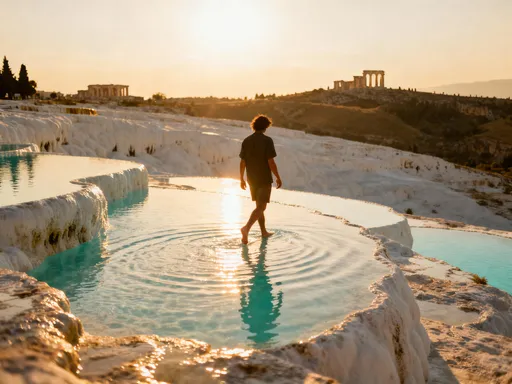
One of the most unique aspects of visiting Pamukkale is the opportunity to walk barefoot across the travertine terraces. This tactile experience transforms the visit from passive observation to active engagement. The smooth, cool surface of the mineral crust feels firm yet slightly yielding underfoot, while the shallow pools—typically ankle to calf deep—allow for a gentle wading experience. Visitors often describe it as walking on nature’s marble, with water so clear it mirrors the sky above.
To protect the delicate formations, strict rules are in place. Shoes must be left at the entrance, and visitors are only allowed to walk on designated paths where water continues to flow and deposit minerals. Swimming is permitted in only a few areas, most notably the Antique Pool, where warm thermal waters surround submerged Roman columns. This pool, believed to have been formed by earthquake damage to the ancient city, allows guests to float among ancient stonework—a rare blend of history and relaxation.
The sensory experience is unforgettable. Sunlight dances on the water’s surface, and the sound of gentle trickling creates a meditative atmosphere. Children laugh as they splash in the shallows, while adults move slowly, savoring the moment. The mineral-rich water is believed to have therapeutic benefits for skin and circulation, though these claims are based more on tradition than clinical evidence. Regardless, the overall effect is deeply calming—a natural spa experience enhanced by stunning surroundings.
For the best experience, timing is essential. Mornings, especially just after opening, offer the softest light and fewest crowds. The terraces are often bathed in golden hues, and photos capture the vivid contrast between white rock and blue water. Late afternoon brings longer shadows and warmer tones, ideal for more dramatic photography. Midday can be crowded and hot, particularly in summer months, so planning an early or late visit improves comfort significantly. Weekdays are generally quieter than weekends, making them ideal for families or those seeking a more reflective experience.
Hidden Corners and Lesser-Known Spots
While the central terraces draw the majority of visitors, those willing to explore beyond the main pathways can discover quieter, more intimate areas of the site. To the north and south edges of the formation, lesser-visited sections offer the same surreal beauty with fewer footprints. These areas often feature abandoned pools, where water flow has shifted over time, leaving behind dry or partially filled basins now reclaimed by moss and wildflowers. These forgotten corners carry a sense of quiet mystery, as if nature is slowly reasserting its presence.
One such area lies along the upper reaches of the hill, where the terraces become steeper and less accessible. Here, the sound of crowds fades, replaced by birdsong and the occasional rustle of wind through nearby trees. The pools in this zone are smaller and less uniform, but their irregular shapes add to their charm. Some retain a thin film of water, shimmering in the sunlight, while others are dry but still gleaming white. These spots are perfect for quiet contemplation, offering solitude without sacrificing the visual magic of the site.
Another hidden gem is the path leading toward the ancient city’s outer walls, where the fusion of nature and history feels especially poignant. Here, broken columns lie half-buried in mineral deposits, and ivy climbs over stone foundations. It’s easy to imagine the centuries passing, with water slowly reshaping the land while human structures slowly return to the earth. For visitors seeking a deeper connection to the site’s story, these off-the-beaten-path locations provide a more immersive experience.
To find these quieter areas, it’s helpful to arrive early and move beyond the first viewpoints. Local guides often know the best routes and can share stories about how the site has changed over time. Families with older children may enjoy turning exploration into a gentle adventure, searching for the most secluded pool or the best vantage point for a panoramic photo. Even with increasing tourism, Pamukkale still holds pockets of peace for those willing to look beyond the obvious.
Beyond the Terraces: The Local Town and Culture
The modern village of Pamukkale, nestled at the base of the terraces, offers a warm and welcoming glimpse into everyday life in this remarkable region. Small family-run cafes serve traditional Turkish tea, fresh pastries, and light meals, often with views of the hillside. Artisans sell handmade soaps infused with thermal spring minerals, locally woven textiles, and ceramic souvenirs inspired by ancient motifs. The pace of life here is relaxed, shaped by the rhythms of tourism and agriculture alike.
Residents take pride in their proximity to a UNESCO World Heritage Site and often speak with affection about the terraces. Many have grown up visiting the pools, and some recall times when access was less regulated and swimming was more common. Today, there’s a growing awareness of the need to balance tourism with preservation. Local businesses increasingly adopt sustainable practices, from reducing plastic waste to promoting eco-friendly transportation options.
The community plays an active role in conservation efforts. Educational programs for children emphasize the geological and historical importance of the site, while local guides ensure visitors understand the rules and significance of what they’re seeing. Some hotels in the area use geothermal energy for heating and offer thermal baths that replicate the natural experience in a controlled setting. These initiatives reflect a broader commitment to responsible tourism—one that honors both the environment and the people who call this place home.
For travelers, engaging with the local culture adds depth to the journey. Sharing a cup of tea with a shop owner, learning a few words in Turkish, or attending a seasonal festival can create meaningful connections. It’s a reminder that behind every great destination is a living community, stewarding its legacy for future generations. For women managing households and seeking moments of beauty and renewal, this human dimension of travel—connection, care, and continuity—can be as enriching as the sights themselves.
Travel Tips for a Smooth Visit
Planning a visit to Pamukkale requires some preparation to ensure a comfortable and rewarding experience. The best times to go are spring (April to June) and fall (September to October), when temperatures are mild, skies are clear, and crowds are manageable. Summer months can be hot, with daytime highs exceeding 35°C (95°F), while winter brings cooler weather and occasional rain, which may make the terraces slippery.
Getting to Pamukkale is straightforward. The nearest major city is Denizli, accessible by bus, train, or domestic flight from Istanbul or Ankara. From Denizli, local shuttles and taxis run regularly to the site. The entrance to the travertines and Hierapolis is located at the same ticket gate, and combined admission is recommended to see both areas. Tickets can be purchased on-site, but visiting during off-peak hours helps avoid long lines.
Packing wisely enhances the experience. A towel is essential for drying off after wading, and water shoes are useful for walking on nearby paths, though they must be removed before entering the terraces. A wide-brimmed hat, sunscreen, and a reusable water bottle help with sun protection and hydration. A camera or smartphone with extra storage is ideal for capturing the stunning visuals, and a small backpack keeps essentials organized.
To extend the trip, consider visiting nearby attractions. The ancient city of Laodicea, just 10 kilometers away, features well-preserved ruins including a theater, agora, and aqueducts. The city’s historical significance and proximity make it an excellent complement to Hierapolis. For nature lovers, the Kaklık Cave, with its own travertine formations and underground river, offers a cool, peaceful retreat. Combining these sites into a two- or three-day itinerary allows for a richer understanding of the region’s natural and cultural heritage.
Conclusion
Pamukkale isn’t just a destination—it’s a reminder of how powerfully nature can shape both land and culture. Its unique fusion of geological wonder and human history creates an experience that stays with you long after you leave. More than beauty, it offers perspective. Standing atop the travertine terraces, with the ruins of Hierapolis stretching behind and the Anatolian sky above, one gains a quiet appreciation for the forces that shape our world—slow, persistent, and deeply interconnected. For families, for dreamers, for anyone seeking a moment of peace and awe, Pamukkale is not just unforgettable—it is transformative. It invites us to walk gently, to observe closely, and to carry forward a deeper respect for the natural treasures we are privileged to witness.