You Won’t Believe What I Discovered Snorkeling in Palau’s Hidden Lagoons
Have you ever floated above a coral garden so vibrant it feels like swimming through a rainbow? That’s exactly what happened when I explored Koror, Palau. This tiny island nation in the Pacific isn’t just beautiful—it’s transformative. From jungle hikes to underwater adventures, every moment here pulls you deeper into nature’s rhythm. If you're craving an escape that awakens your senses and redefines adventure, this is it. The islands rise like emerald sentinels from a sea of liquid sapphire, their interiors cloaked in dense rainforest, their shores fringed with powdery white sand. In Palau, nature doesn’t merely surround you—it embraces you, challenges you, and changes you. This is not tourism as usual; it is immersion in one of the planet’s last pristine marine sanctuaries.
Arrival in Paradise: First Impressions of Koror
Koror, the most populous state in Palau, greets visitors with a quiet charm that unfolds gradually. As the plane descends toward Roman Tmetuchl International Airport on the nearby island of Babeldaob, the first sight is a breathtaking mosaic of jungle-covered karst islands scattered across the Pacific like jewels on blue velvet. The air upon stepping off the aircraft is warm and humid, carrying the scent of salt, frangipani, and damp earth—a sensory prelude to the island’s untamed beauty. Koror itself is compact, lined with palm trees, modest buildings, and narrow roads that wind along the coastline. It’s a place where life moves at the pace of the tides, and where smiles are exchanged freely among locals and visitors alike.
What sets Palau apart is not only its geography but also its deep-rooted respect for nature. The nation comprises over 340 islands stretching across nearly 700 square miles of ocean, yet its population remains under 20,000. This low human footprint has allowed ecosystems to thrive in ways rarely seen elsewhere. The Rock Islands, a UNESCO World Heritage Site, are perhaps the most iconic feature—hundreds of mushroom-shaped limestone formations rising from the sea, many crowned with dense vegetation and surrounded by coral reefs. These islands are not just scenic; they are part of a complex marine and cultural landscape shaped by centuries of stewardship.
Getting from the airport to Koror takes about 30 minutes by shuttle or rental vehicle. Most visitors choose to stay in guesthouses, eco-lodges, or small resorts that blend into the natural surroundings. Options range from budget-friendly family-run accommodations to more secluded, upscale bungalows with ocean views. One key tip for new arrivals is to embrace “island time”—schedules are fluid, services may operate at a relaxed pace, and spontaneity often leads to the most memorable experiences. Unplugging from digital distractions isn’t just recommended; it’s inevitable, and deeply restorative.
To ease into the rhythm of the island, many begin with a simple walk along the Ngermeaus Trail or a visit to the Palau National Congress building, where traditional design elements reflect the nation’s cultural pride. Others opt for a sunset cruise on a local outrigger canoe, gently paddling through the sheltered bays as the sky ignites in hues of gold and rose. These quiet moments of arrival lay the foundation for a journey that is less about sightseeing and more about sensing—the pulse of the ocean, the whisper of the wind through palm fronds, the slow, steady heartbeat of a place that has learned to live in balance with its environment.
The Magic of Jellyfish Lake: A Once-in-a-Lifetime Swim
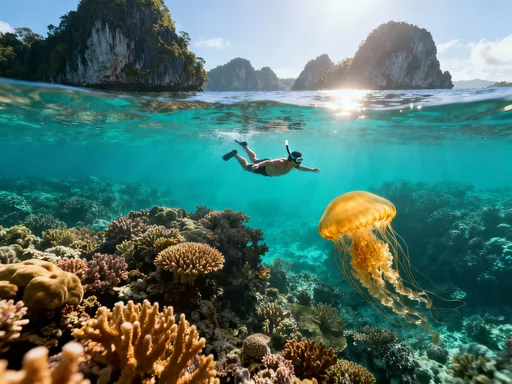
Among Palau’s most extraordinary natural wonders is Jellyfish Lake, a landlocked marine lake nestled within one of the Rock Islands. This secluded body of water is home to millions of golden jellyfish that migrate daily across the lake, following the sun’s arc in a silent, pulsating ballet. What makes this experience truly magical is that these jellyfish—specifically the subspecies *Mastigias papua etpisoni*—have evolved over thousands of years in isolation, losing their ability to deliver a sting harmful to humans. Swimming among them feels like floating through a living constellation, each translucent bell glowing with internal light, gently bumping against skin like soft whispers from the sea.
Reaching the lake requires a short but moderately challenging hike. A well-maintained trail leads through sun-dappled jungle, crossing wooden boardwalks and rocky terrain. The path, though only about 15 minutes long, demands sturdy footwear and a moderate level of fitness, especially in the tropical heat. Along the way, guides often point out native flora and fauna, including fruit bats roosting in the canopy and rare mangrove species clinging to the limestone. The air hums with insect life, and the scent of damp foliage grows richer with each step. When the trail opens to the lake’s edge, the view is nothing short of awe-inspiring—a mirror-like expanse of still water surrounded by steep limestone walls draped in green.
Before entering, visitors are briefed on strict conservation rules. No sunscreen, lotions, or waterproof gear treated with harmful chemicals are allowed, as even minute pollutants can disrupt the lake’s delicate ecosystem. Snorkeling is permitted only with a licensed guide, and all swimmers must use biodegradable rash guards. These precautions are not mere suggestions; they are essential to preserving a habitat so unique that it exists nowhere else on Earth. The lake’s salinity, temperature, and microbial balance are finely tuned, and human impact must be minimized at all costs.
Once in the water, the sensation is surreal. The jellyfish drift in dense schools, their golden bodies pulsing in unison. They do not avoid contact; instead, they brush gently against arms and legs, creating a tingling, almost electric sensation. Their movement is driven by symbiotic algae living within their tissues, which require sunlight to photosynthesize—hence their daily horizontal migration across the lake. This intricate relationship between organism and environment is a testament to nature’s ingenuity. Floating among them, one cannot help but feel a profound sense of connection—not just to the jellyfish, but to the entire web of life that sustains them.
Jellyfish Lake is closed periodically to allow the population to recover from environmental stressors such as drought or warming waters. This adaptive management reflects Palau’s commitment to long-term ecological health over short-term tourism gains. When open, the experience remains one of the most ethereal underwater encounters available anywhere in the world—a rare privilege that demands reverence and responsibility from all who partake.
Rock Island Adventures: Kayaking Through Emerald Channels
The Rock Islands are more than a backdrop; they are a living labyrinth of waterways, caves, and hidden lagoons waiting to be explored. One of the most intimate ways to experience them is by kayak, gliding silently through narrow channels where the water shifts from deep blue to luminous green as sunlight filters through overhead rock formations. Guided kayaking tours typically begin early in the morning, when the sea is calmest and the air is still cool. Paddlers navigate through tidal passages that open and close with the rhythm of the ocean, discovering secret coves accessible only by water.
As the kayak slips between towering limestone cliffs, the world above fades away. The only sounds are the dip of paddles, the distant cry of a seabird, and the soft lap of waves against stone. Some channels are so narrow that arms can almost touch both sides, while others open suddenly into circular lagoons encircled by jungle. These “lakes within the sea” are often home to small populations of jellyfish or anemones, thriving in the semi-isolated conditions. Explorers may crawl through low-ceilinged caves, using hands to pull the kayak forward, emerging into sunlit chambers where light dances on the water like liquid gold.
One of the most photographed sites is the famous “Blue Corner” entrance to a submerged cave system, where the interplay of light and water creates an ethereal glow. Another is the “Swamp Forest,” a mangrove-lined inlet where roots arch above the surface like skeletal fingers, sheltering juvenile fish and crustaceans. These ecosystems are fragile, and guides emphasize the importance of staying within designated routes to avoid damaging coral or disturbing wildlife. Even anchoring is restricted in many areas to prevent reef destruction.
The best time for kayaking is during mid-tide, when currents are manageable and visibility is high. Early morning or late afternoon trips offer not only calmer waters but also the chance to see wildlife at its most active—reef herons stalking prey along the shallows, monitor lizards basking on sun-warmed rocks, and schools of parrotfish darting through seagrass beds. Safety is paramount: all tours provide life jackets, waterproof communication devices, and experienced guides trained in marine rescue. For families and solo travelers alike, kayaking offers a peaceful yet adventurous way to engage with Palau’s natural grandeur—one paddle stroke at a time.
Snorkeling the Ngeruktabel Channel: Where Sharks Circle Gently
For those seeking a more exhilarating underwater experience, the Ngeruktabel Channel offers a snorkeling adventure unlike any other. Located on the western edge of the Rock Islands, this site features a dramatic drop-off where shallow reef gives way to abyssal depths. From the surface, snorkelers can peer into the blue void as reef sharks—primarily blacktip and grey reef sharks—glide silently below, their sleek forms cutting through the water with effortless grace. Despite their imposing presence, these sharks are not a threat to humans; they are curious, cautious, and deeply attuned to their environment.
The snorkeling experience begins with a boat ride across calm waters, followed by a backward roll off the vessel into the channel. The first breath through the snorkel is often accompanied by a rush of adrenaline—there is something primal about floating above an endless blue trench, knowing that powerful predators move beneath. Yet, as the initial nerves settle, a sense of peace takes over. The reef teems with life: vibrant coral formations in shades of purple, orange, and electric blue; clouds of anthias and damselfish swirling in unison; and the occasional eagle ray flapping its wings like a ghostly shadow in the distance.
What makes this site exceptional is the clarity of the water and the abundance of marine traffic. Barracuda form shimmering curtains in the current, while Napoleon wrasse—massive, slow-moving fish with bulbous foreheads—drift past with an almost regal demeanor. The wall itself drops hundreds of feet, its contours alive with sponges, tunicates, and gorgonian fans that sway in the surge. Visibility often exceeds 100 feet, allowing snorkelers to witness the full scale of this underwater metropolis.
Responsible practices are critical here. All visitors are required to use reef-safe sunscreen, free of oxybenzone and octinoxate, which have been scientifically proven to damage coral DNA and contribute to bleaching. Touching or feeding marine life is strictly prohibited, and snorkelers are instructed to maintain neutral buoyancy to avoid kicking up sediment or breaking fragile coral branches. Guides accompany each group, monitoring behavior and providing real-time commentary on the species observed. This combination of awe-inspiring wildlife and disciplined conservation sets a standard for eco-conscious adventure tourism.
The presence of sharks, far from being a danger, is actually a sign of ecosystem health. Their numbers have rebounded in recent years due to Palau’s stringent marine protections, serving as apex indicators of a balanced food web. To swim above them is to witness nature in its most harmonious state—not tamed, not threatened, but thriving. It is a humbling reminder that humans are guests in this realm, and that true adventure lies not in conquest, but in quiet observation.
Cultural Encounters: Connecting with Palauan Traditions
Beyond its natural wonders, Palau offers a rich cultural tapestry woven from centuries of seafaring, farming, and communal living. A visit to a traditional village provides a window into this heritage, where customs are preserved with quiet pride. In places like Airai or Melekeok, visitors may be invited to participate in a *kamadui*—a welcoming ceremony that includes chants, drumming, and the offering of woven mats or shells as tokens of respect. These rituals are not performed for entertainment; they are living expressions of identity and hospitality.
One of the most meaningful aspects of Palauan culture is its cuisine, deeply rooted in the land and sea. Meals often center around staple foods like taro, breadfruit, and yam, served alongside fresh fish prepared with coconut milk, lime, and local herbs. A dish known as *kelaguen*—chopped meat or seafood marinated in lemon juice, coconut, and peppers—is a national favorite, offering a burst of flavor that lingers on the palate. Eating together is a communal act, reinforcing bonds between family and visitors alike. Many tours include a village lunch, where guests sit on woven mats and eat with their hands, embracing the simplicity and authenticity of the experience.
Central to Palauan values is the concept of *bul*, a traditional conservation ethic that translates roughly to “taboo” or “forbidden.” Historically, *bul* was used to protect resources during times of scarcity—fishing might be banned in certain areas, or harvesting restricted during breeding seasons. Today, this ancient wisdom informs modern environmental policy, creating a bridge between tradition and science. Communities manage their own marine zones, deciding when and where fishing is allowed, ensuring sustainability for future generations. Tourism revenues support these efforts, funding education, infrastructure, and conservation projects that benefit both residents and ecosystems.
Visitors are encouraged to approach these cultural experiences with humility and openness. Dress modestly when entering villages, remove shoes before entering homes, and ask permission before taking photographs. These small gestures go a long way in building mutual respect. By engaging with Palauan traditions not as spectators but as participants, travelers gain a deeper understanding of what it means to live in harmony with nature—a lesson that resonates long after the journey ends.
Diving Deeper: Why Palau Leads in Marine Conservation
Palau’s reputation as a global leader in marine conservation is not accidental—it is the result of deliberate, science-based policy and deep cultural commitment. In 2015, the nation established the Palau National Marine Sanctuary, a groundbreaking initiative that protects 80% of its exclusive economic zone from commercial fishing. This vast area—covering over 183,000 square miles—ranks among the largest marine protected areas in the world. Within the sanctuary, all extractive activities are prohibited, allowing fish populations, coral reefs, and migratory species to recover and flourish.
The remaining 20% of Palau’s waters are designated as a domestic fishing zone, where local fishermen can continue to harvest sustainably. This balanced approach ensures food security for residents while safeguarding biodiversity. Studies have shown measurable improvements in fish biomass and reef health since the sanctuary’s creation. For example, shark populations have increased by over 60% in monitored areas, and coral cover has stabilized despite global trends of decline. These outcomes demonstrate that large-scale protection, when combined with community involvement, can yield tangible ecological benefits.
Palau also pioneered the Palau Pledge, a mandatory eco-pledge that every visitor must sign upon arrival. Printed on the immigration form, it reads: “I pledge to act in an ecologically responsible way during my stay in Palau.” This innovative program, launched in 2018, educates tourists about their environmental impact and encourages mindful behavior—from reducing plastic use to respecting wildlife. The pledge has since inspired similar initiatives in other island nations, proving that small countries can lead global change.
Sustainable tourism is not an afterthought in Palau; it is a core principle. Tour operators are licensed and monitored, ensuring adherence to environmental standards. Coral nurseries, reef monitoring programs, and beach cleanups are common, often involving both locals and visitors. Schools incorporate marine science into their curricula, fostering a new generation of ocean stewards. By aligning economic development with ecological integrity, Palau has created a model that other nations are beginning to emulate. Travelers who come here are not just witnessing conservation—they are participating in it.
Practical Insights: Planning Your Own Immersive Escape
For those inspired to visit Palau, careful planning ensures a smooth and rewarding experience. The best time to travel is during the dry season, from November to April, when skies are clear, seas are calm, and visibility for snorkeling and diving is optimal. Rainfall increases from May to October, though showers are usually brief and do not significantly disrupt activities. Average temperatures remain between 80°F and 88°F year-round, making Palau a warm-weather destination at any time.
Most international visitors arrive via United Airlines from Guam or the Philippines, with flights landing at Roman Tmetuchl International Airport. Citizens of the United States, Canada, the European Union, Japan, and several other countries receive a 30-day visa upon arrival, extendable up to 12 months under certain conditions. Travelers must present a valid passport, return ticket, and proof of sufficient funds. Health requirements are minimal; no vaccinations are mandatory, though routine immunizations are recommended.
Packing should prioritize sun protection, hydration, and eco-conscious choices. Lightweight, quick-dry clothing, a wide-brimmed hat, and polarized sunglasses are essential. For water activities, a rash guard, reef-safe sunscreen, and a reusable water bottle are must-haves. Waterproof dry bags, snorkel gear, and waterproof cameras enhance the experience but can also be rented locally. Avoid single-use plastics whenever possible—many resorts and tours have eliminated plastic straws, bottles, and bags in line with national policy.
When selecting tour operators, look for those certified by the Palau Visitors Bureau and affiliated with conservation organizations. Reputable companies employ local guides, limit group sizes, and contribute to environmental programs. Popular activities include guided snorkel tours, island-hopping excursions, and cultural village visits, all of which can be booked in advance or upon arrival. For a more immersive experience, consider staying in eco-lodges on outer islands or participating in volunteer conservation programs.
Finally, adopt a mindset of slow travel. Rather than rushing from one site to the next, allow time to linger—to watch the sunrise over the lagoon, to learn a few words in Palauan, to sit quietly and listen to the waves. Palau rewards patience and presence. It is not a destination to be conquered, but a place to be felt, remembered, and honored.
Experiencing Koror is not about collecting photographs or checking off landmarks. It is about immersion—of body, mind, and spirit—into a world where nature still holds dominion. From the silent dance of the jellyfish to the ancient wisdom of the *bul*, every element speaks of balance, resilience, and reverence. This is transformative travel at its purest: a journey that awakens wonder, deepens connection, and instills a quiet sense of responsibility. Palau does not ask to be admired from afar; it invites participation, mindfulness, and stewardship. As you float above its coral gardens, breathing in rhythm with the waves, you realize that the greatest discovery is not what lies beneath the surface—but what stirs within you. Explore with care. Leave only reverence behind.